How Sustainable Industrial Park in India Are Preparing for the Green Hydrogen Economy
India'sindustrial buildout is being judged on a new scorecard. Land price and labourcost still matter, but emissions data, water treatment capacity and renewableaccess now decide many site selection calls. That shift is why a sustainable industrial park in Indiahas moved from niche to default for chemical manufacturers with globalcustomers.
The National Green Hydrogen Mission sharpened the timeline. Approved in January2023 with an outlay of ₹19,744 crore, it targets 5 million metric tonnes ofgreen hydrogen a year by 2030, backed by roughly 125 GW of added renewablecapacity. Park like Payal Industrial Park (PIP) in Dahej PCPIR, Gujarat are buildingthe utilities that make that target usable at plant level.
What Makes a Sustainable Industrial Park in India?
A sustainable industrial park in India is a planned estate that supplies shared cleanutilities, treats effluent centrally and runs on renewable power, so tenantscut emissions and capital spend together. It combines pre-approved land,utility corridors and ESG-grade governance in one location.
Key Characteristics of a Sustainable Industrial Park
Look foron-site renewable generation, a common effluent treatment plant, wastemanagement support, planned green cover, and a utility corridor carrying water,power and industrial gases. Without shared infrastructure, every tenantduplicates the same spend.
Why Sustainability Matters in Industrial Development
Buyers inthe EU, Japan and the US audit supplier emissions. Lenders price ESG risk intoterms. A plot inside an eco industrial park in India carries documentation a standalone site cannot produce, whichshortens due diligence for customers and financiers alike.
Benefits of Sustainable Infrastructure for Manufacturers
Shared assets convert fixed costs into operating costs. A tenant using central effluent treatment and group captive solar avoids two large capital projects.At PIP, pre-approved zoning and ready utilities support operational status in about seven months.
Why Green Hydrogen is Transforming Chemical Manufacturing
What is Green Hydrogen?
Green hydrogen is hydrogen produced by splitting water in an electrolyser powered byrenewable electricity. Under India's standard, hydrogen qualifies as green only when production emits less than 2 kg of CO2 equivalent per kilogram of hydrogen. Grey hydrogen, made from natural gas, emits far more.
Green Hydrogen in the Chemical Industry
Chemical plants already consume hydrogen in bulk for hydrogenation, ammonia and methanolsynthesis, and refining. Substituting green hydrogen changes the carbon profile of the product without redesigning the process. That is why the green hydrogen chemical industry moved from pilots to procurement so quickly.
Industrial Decarbonization Through Hydrogen Energy
Hydrogen energy production also reaches heat-intensive steps that electrification struggles with. For industrial decarbonization in India, that matters:hard-to-abate processes hold most residual emissions once a plant has switched its electricity supply.
How Payal Industrial Park is Preparing for the Green Hydrogen Economy
55 MW Renewable Energy Capacity
PIP offers access to a 55 MW solar plant under a Group Captive SPV model, whereconsuming industries hold 26% equity and the developer handles financing andexecution. Tenants get clean power with no upfront plant investment, nocross-subsidy surcharge and a lower long-term tariff.
Green Hydrogen Initiative with Fourier Earth
PIP has partnered with FourierEarth, a Palo Alto based hydrogen startup, for green hydrogen production in Indian industrial Park. Modular electrolysers generate 3 to 6 kilograms per hour from renewable power and water, inside the park boundary. Producing at the point of useremoves the storage and transport cost that usually blocks smaller hydrogen users.
ESG Manufacturing in Gujarat
PIP's ESG framework spans environmental, social, governance and economic pillars, with astated carbon neutrality target of 2040. The park hosted a Sustainability Conclave at Dahej in April 2025 alongside its CETP inauguration, and presentedat the Indian Chemical Council's Sustainability Conclave 2025. For firmsassessing ESG manufacturing in Gujarat, that record is verifiable rather thanaspirational.
Industrial Park with Utility Infrastructure
An industrial park withutility infrastructure earns its value in the details. PIP's corridorprovisions nitrogen, oxygen, argon and hydrogen alongside reliable water andpower. Its CETP runs at 2.5 MLD against a permitted 50 MLD, holds MoEFCC approval, accepts high-COD inlet loads and discharges via deep sea outfall.
Circular Economy Manufacturing Practices
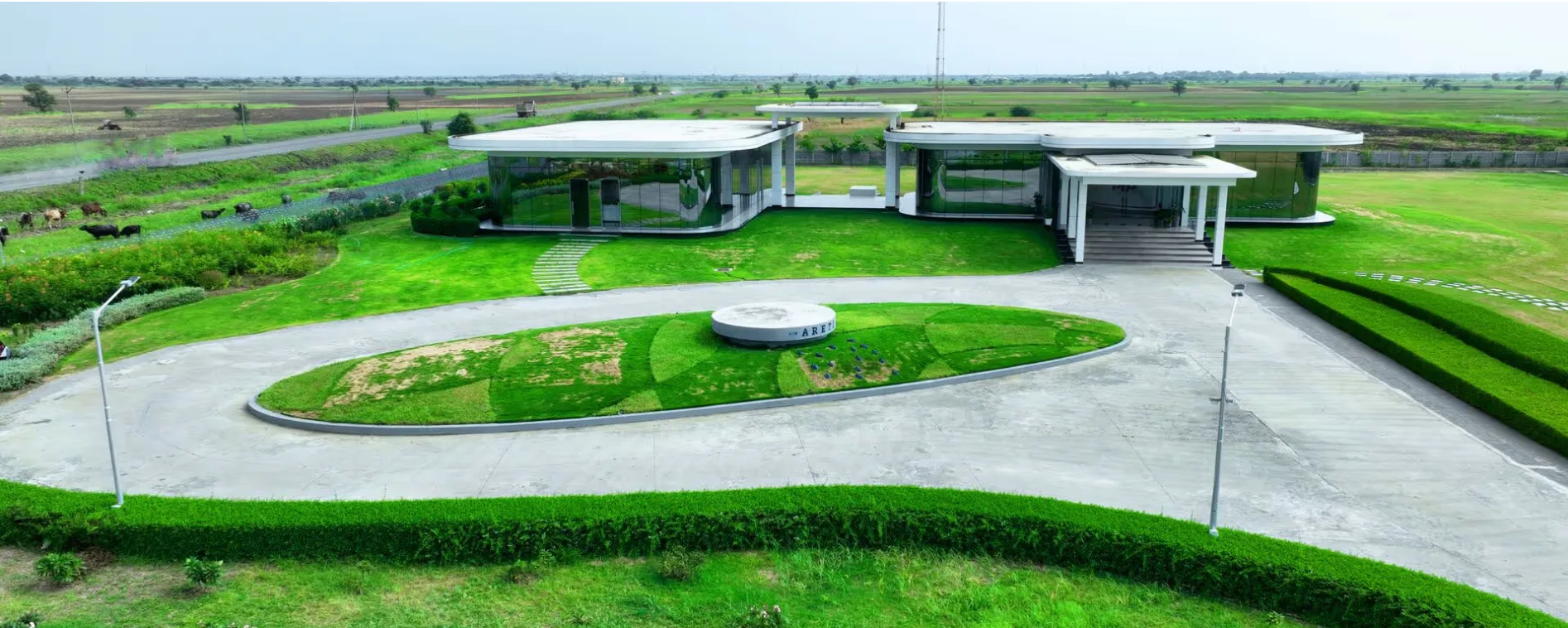
Circular economy manufacturing at PIP means treated water reuse through ZLD-readysystems, centralised waste handling, and a 30 to 60 tonne per day steamfacility planned to shift from coal to biomass. The park reports 25,000 treesacross more than 250 acres of green space.
Benefits of Investing in a Sustainable Industrial Park in India
Lower Carbon Footprint
Sharedsolar, green steam and hydrogen supply cut Scope 1 and Scope 2 emissions from day one, with no separate abatement project.
Renewable Energy Integration
A renewable energy industrial park delivers clean power under a structured commercial model, so tenants meet renewable targets without owning generation assets.
ESG Compliance
Pre-approved zoning, MoEFCC-cleared effluent treatment and SPV-backed energy contract screate the paper trail auditors and lenders ask for.
Future-Ready Manufacturing Infrastructure
Hydrogen ready utilities hedge against carbon pricing and border adjustment mechanisms thatwill reprice high-emission exports.
Long-Term Cost Efficiency
Groupcaptive power avoids cross-subsidy charges and central treatment avoids adedicated ETP, lowering cost per tonne across the asset life.
Why Global Investors Prefer Sustainable Industrial Park
ESG Investment Trends
Capital allocators screen for transition risk before returns. A green hydrogen industrial park clears that screen faster than a conventional estate.
Green Manufacturing in India
Green manufacturing in India is now an export requirement, not a marketing position.Customers ask for product-level carbon data before signing supply agreements.
Renewable Energy Powered Industrial Park
Renewable energy powered industrial Park in Gujarat benefit from high solar irradiance,port access and an established chemical cluster, which keeps drawing FDI to Dahej PCPIR.
Sustainable Supply Chains
Multi-national sconsolidate suppliers into locations they can audit once. Clustering inside agreen industrial ecosystem simplifies that audit for the whole chain.
Key Sustainability Features at Payal Industrial Park
- 55 MW solar renewable capacity under a Group Captive SPV with 26% tenant equity
- On-site green hydrogen with Fourier Earth at 3 to 6 kg per hour from modular electrolysers
- Utility corridor carrying water, power, nitrogen, oxygen, argon and hydrogen
- ESG initiatives across environmental, social, governance and economic pillars, targeting carbon neutrality by 2040
- Sustainable planning with 25,000 trees and 250+ acres of green space
- Integrated industrial ecosystem across 3,500 acres in Dahej PCPIR, Phase 1 operational and Phase 2 at 850 acres
- Infrastructure including a 2.5 MLD CETP (permitted to 50 MLD), planned green steam of 30 to 60 TPD, internal roads and port-linked logistics
- Ready-to-move industrial plots with plug-and-play utilities and pre-approved zoning
Conclusion
India istrying to add manufacturing capacity and cut emissions at once, and industrial Park are where those goals meet. Shared renewable capacity, central effluent treatment and on-site hydrogen let individual plants decarbonize without carrying the full cost alone.
Payal Industrial Park has those pieces in place: 55 MW of solar, a working CETP, a green hydrogen partnership with Fourier Earth, andan ESG framework aimed at carbon neutrality by 2040. For manufacturers choosinga sustainable industrial park in India, the question is no longer whether green infrastructure exists, but how fast they can plug into it.
Frequently Asked Questions (FAQs)
What makes an industrial park sustainable?
An industrial park is sustainable when it supplies shared clean utilities instead of leaving each tenant to solve emissions alone. Core markers include on-site renewable generation, a common effluent treatment plant with regulatory clearance, waste management support, planned green cover, and a utility corridor delivering water, power and industrial gases to every plot.
How is green hydrogen used in chemicalmanufacturing?
Chemical plants use hydrogen for hydrogenation reactions, ammonia and methanolsynthesis, and refining. Green hydrogen replaces grey hydrogen in these samesteps without redesigning the process, which lowers the carbon intensity of the finished product. It also supplies high-temperature heat for processes that aredifficult to electrify directly.
What renewable energy capacity does PayalIndustrial Park offer?
Payal Industrial Park offers access to 55 MW of solar capacity through a Group Captive SPV model, in which consuming industries hold 26% equity while the developer manages financing and implementation. Tenants receive renewable power with no upfront investment, no cross-subsidy surcharge, and a lower tariff than standard grid supply.
Why does ESG matter for industrial site selection?
ESG performance now affects market access and cost of capital. Export customers audit supplier emissions, lenders price transition risk into terms, and carbon border mechanisms reprice high-emission goods. A site with documented renewable supply, cleared effluent treatment and transparent governance shortens due diligence and cuts the tenant's compliance burden.
Why should manufacturers invest in a sustainableindustrial park in India?
Shared infrastructure turns large capital projects into operating costs. Instead offunding a private power plant and a dedicated effluent plant, a tenant buysinto existing systems. At PIP, pre-approved land and ready utilities support operational status in roughly seven months, while renewable and hydrogen supplyhedge future carbon costs.
Explore Advantages
Payal Industrial Park is built for manufacturers who have to answer ESG questionsfrom customers, auditors and lenders. Solar capacity, on-site green hydrogen,cleared effluent treatment and ready-to-move plots are already in place inside Dahej PCPIR.
If you are evaluating sites for a new plant oran expansion, talk to the PIP team about plot availability, utility allocationand the green energy model that fits your load profile. Schedule a visit, or request the sustainability and infrastructure brief for your project.
The Infrastructure Is Ready. The Advantage Is Yours.
Discover how PIP enables seamless setup and scalable growth—powered by ready infrastructure and end-to-end operational support.
Schedule a Visit