Water Supply and Effluent Treatment Infrastructure in the Chemical Park inDahej PCPIR
Chemical manufacturing runs on two utilities that rarelymake it into a site brochure: the water going in and the effluent coming out.Get either one wrong and the plant stalls, whatever else the location offers.
That is why any chemical park in Dahej PCPIR gets judged first on water availability and effluent treatment before anyone looks at plot pricing. Dahej sits in Bharuch district, Gujarat, inside anotified Petroleum, Chemical and Petrochemical Investment Region built aroundport access and a dense cluster of chemical and petrochemical units.
This article covers the water a chemical plant actually consumes, how a common effluent treatment plant works inside an industrial cluster, what zero liquid discharge does and does not mean, and the utility questions worth asking before you sign for land.
Why water and effluent infrastructure decides your project timeline
Land is the easy part of a chemical project. Utilities arewhat determine whether you commission on schedule or spend two years chasing approvals and pipelines.
Why reliable industrial water supply matters
Water in a chemical plant is not one requirement. It is several, each with a different quality specification.
Process water goes into the reaction itself and often needs demineralisation. Cooling towers consume the largest volume in most plants andlose water continuously to evaporation and blowdown. Boilers need feed watertreated to tight conductivity and hardness limits, because scale in a boilertube is an expensive failure.
Add equipment washdown, firefighting reserve and utilityuse, and industrial water supply becomes a continuous load rather than a peak one. A raw water supply pipeline with allocated volume, storage buffer and treated water distribution inside the estate is worth more to a plant than any single amenity.
Water treatment infrastructure in Gujarat is largely delivered through GIDC networks feeding industrial estates. What varies between estates is allocated quantity, pressure at the plot boundary and how long the connection takes.
Why effluent treatment is essential for chemical industries
Industrial effluent is the liquid waste stream a plantdischarges after production, cleaning and utility operations. Chemical units generate some of the most complex effluent of any sector, with high chemical oxygen demand, dissolved solids, variable pH and trace organics that municipal systems cannot handle.
Wastewater treatment in the chemical industry is a licence condition, not an optional add-on. Consent to Operate from the state pollution controlboard is tied to how effluent gets treated, monitored and disposed of.
Building a full in-house effluent treatment plant iscapital-heavy and needs specialist operators. This is why effluent treatment infrastructure in Gujarat has moved toward shared facilities inside industrial clusters, with individual units handling pretreatment and a central plant doingthe rest.
Water supply infrastructure in Dahej PCPIR
Dahej draws its industrial water through the GIDC distribution system, which supplies estates across the region for manufacturing use rather than domestic consumption.
For a manufacturer, the practical questions are narrow. How many MLD is the estate sanctioned, how much of that is already committed to existing units, and does the internal network reach your plot boundary or stopat the estate gate?
An estate with a designed distribution network can offer treated water at usable pressure without every unit building its own intake and pumping arrangement. That removes a line item from the project budget and adependency from the commissioning schedule.
Water recycling matters here too. A park that treats and reuses part of its wastewater reduces the pressure on freshwater allocation,which becomes relevant as more units come online in the same estate.
Effluent treatment infrastructure in the chemical park in Dahej PCPIR
What a common effluent treatment plant does
A common effluent treatment plant, or CETP, is a shared facility that collects and treats wastewater from multiple industrial units inone cluster instead of each unit running a standalone plant.
The logic is scale. A single CETP can afford treatment stages, monitoring instrumentation and trained operators that a mid-sized unitcould not justify alone. Centralised treatment also gives regulators one accountable operator to inspect rather than fifty.
Individual units still carry responsibility. Most CETPs specify inlet norms, and each unit must pre-treat its effluent to meet those limits before discharging into the collection network. Higher permitted inletnorms mean less pre-treatment equipment inside your factory.
Treated effluent then goes to an approved disposal route. Incoastal Gujarat that is often a deep sea pipeline disposal system operating under conditions set by the Ministry of Environment, Forest and Climate Change.

Industrial wastewater management inside the estate
A working wastewater management system covers the fullchain, not just the treatment plant.
• Doorstep collection through a dedicated underground pipeline network, so units are not moving effluent by tanker
• Pre-treatmentat the unit level to meet CETP inlet limits
• Primary,biological and tertiary treatment stages sized for the cluster's load
• Samplingand flow monitoring at unit outlets and at the plant inlet
• Recovery and reuse of treated water where the quality permits
• Compliant disposal of the remaining stream and of the sludge
Monitoring is the part manufacturers underestimate. Real-timesampling and documented operating procedures protect compliant units from beingpenalised for a neighbour's discharge.
Zero liquid discharge and water recycling
Zero liquid discharge means a facility recovers effectivelyall of its wastewater for reuse and leaves no liquid stream going out, with theremaining salts handled as solid residue. Typical ZLD trains use evaporationand crystallisation after conventional treatment.
ZLD is expensive to build and energy-intensive to run.Whether it applies to you depends on your product, your effluentcharacteristics, your state pollution control board conditions and the disposaloptions available at the site.
Some categories of chemical units in India are required tooperate ZLD. Others operate legitimately with treated discharge through anapproved route. A park's readiness for ZLD is worth confirming in writing rather than assuming, because a park being ZLD-ready and a specific unit being required to run ZLD are two separate things.
Partial water recycling sits between the two and is oftenthe more practical route. Recovering cooling tower blowdown or treated effluentfor non-process use cuts freshwater draw without the cost of a full ZLD train.
Chemical park infrastructure in Dahej beyond water and ETP
A chemical park is autility platform, not a land subdivision. The infrastructure that decides howquickly a unit reaches production usually includes:
• Internalroads built for tanker and trailer loads
• Stormdrainage separated from the effluent network
• A dedicatedsubstation and trench-ready power distribution
• Pipednatural gas connectivity to the plot
• Utilitycorridors carrying power, water, gas and effluent lines together
• A firestation and emergency response capability inside the estate
• Road, railand port connectivity for raw material and finished goods
• Warehousingand storage, including hazardous material handling
• Environmental monitoring and estate-level compliance support
Plug and play industrial infrastructure means these service sreach the plot boundary before you start construction. The difference shows upin months saved, not in marketing language.
Why Dahej PCPIR is important for chemical manufacturing
Dahej was notified as a Petroleum, Chemical and Petrochemical Investment Region to concentrate chemical and petrochemical investment around port and feedstock access in Bharuch district.
The clustering effect is the real advantage. Intermediatesmade in one unit become inputs for another a few kilometres away, which shortens supply chains and reduces logistics cost for both.
Dahej port handles bulk liquid and chemical cargo, which matters for units importing feedstock or exporting product. Road and rail links connect the region to Vadodara, Surat, Ahmedabad and the wider western corridor.
Gujarat also has a deep base of chemical engineering talent,equipment fabricators and contractors who have built plants in this region before. Availability of people who have done the work locally is an underrated part of a project schedule.
Payal Industrial Park and its water and ETP infrastructure
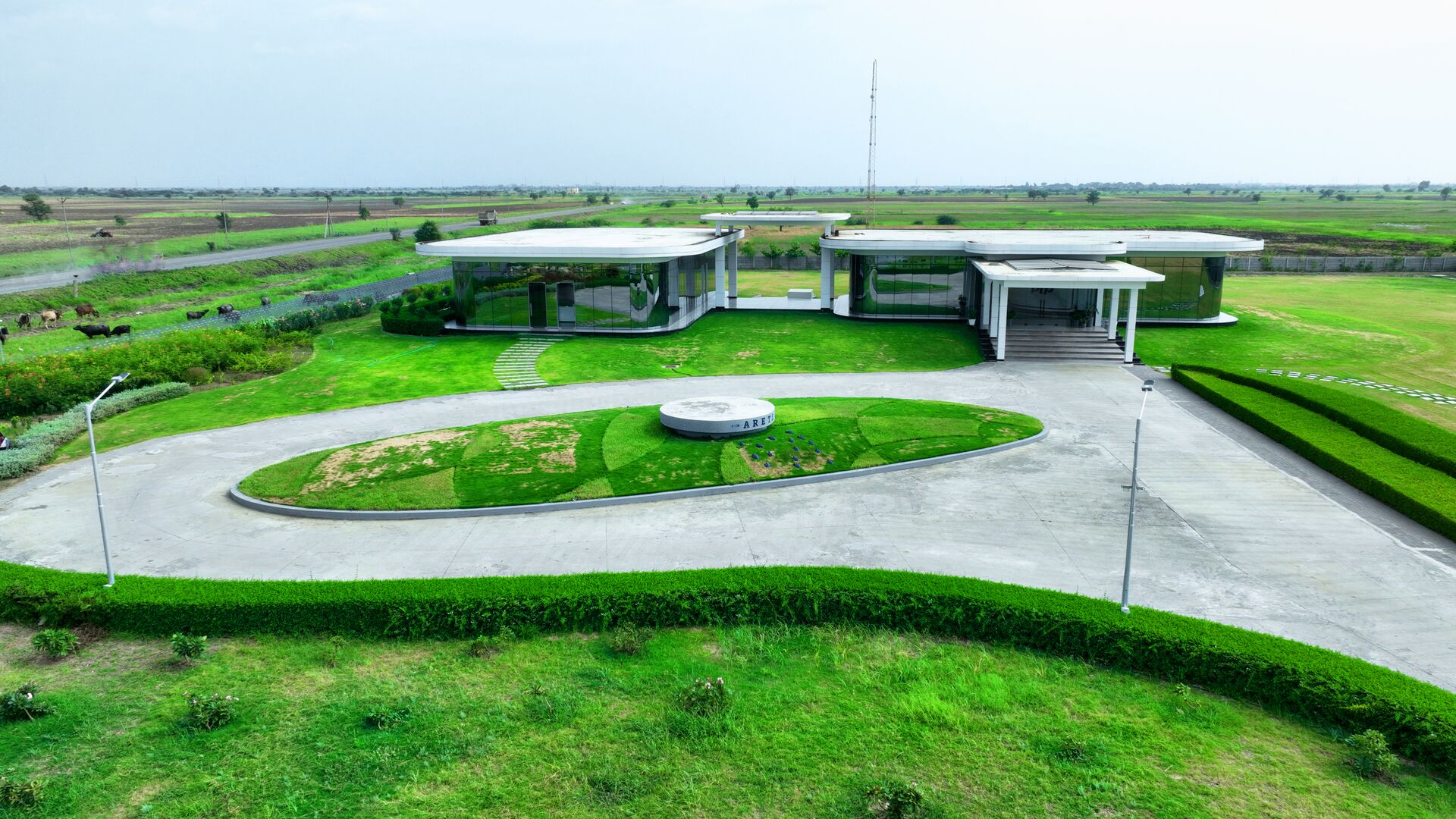
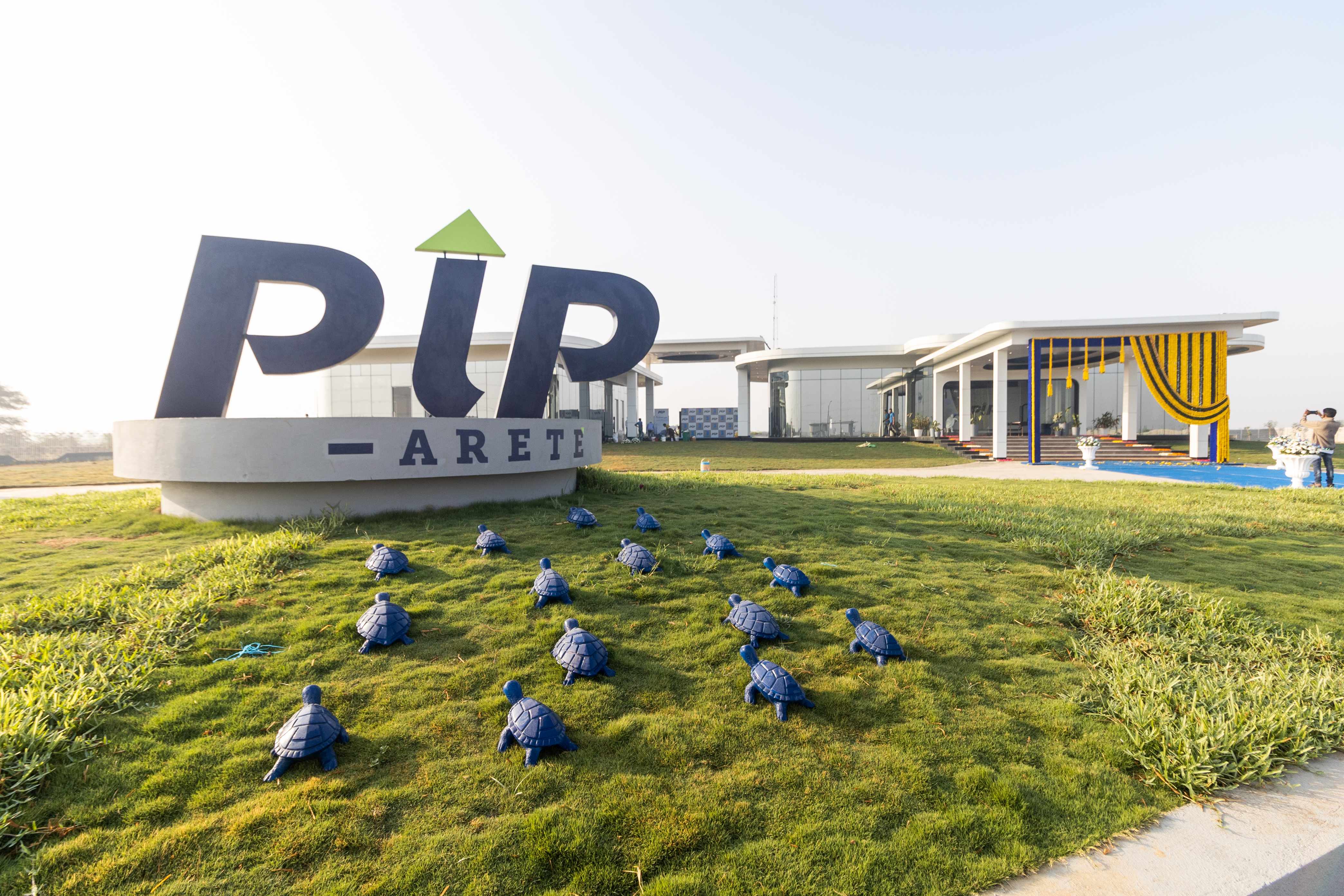
Payal Industrial Park by Arete, is a 3,500-acre chemical park in Dahej PCPIR, near Dahej III GIDC Estate at Village Pakhajan in Vagra taluka, Bharuch district. Phase 1 covers 1,350 acres and isoperational. The masterplan was developed by Jacobs.
On water, PIP lists 92 MLD supplied by GIDC with adistribution network designed for high-volume industrial use. Industrial waterconnection is shown at roughly one month within the park's stated seven-monthtimeline from sale deed to start of construction.
On effluent, PIP has MoEFCC approval for deep sea discharge,and a 15 MLD CETP with two-stage biological treatment is under development aspart of Phase 1. Published inlet norms are COD up to 5,000 ppm and BOD up t 1,800 ppm, which reduces how much primary treatment equipment a unit needsinside its own boundary.
Collection is through a centralised pipeline network to eachunit, with real-time sampling and documented procedures at the park level. Water, power, gas and effluent lines run through integrated utility corridors to the plot.
Any thing beyond this, including current commissioned capacity, allocation available to a specific plot and the treatment stages relevant to your effluent profile, should be confirmed directly with the park team against your own process data.
What to check before choosing an industrial plot in Dahej
Use this as a site visit check list rather than a brochure comparison.
• Sanctioned water quantity for the estate, and how much is already allocated
• Whether the water line terminates at your plot boundary or the estate gate
• Water quality at delivery, and what treatment you will still need in-plant
• CETP status: commissioned, under construction or planned, and current capacity
• Published inlet norms, and what pre-treatment your effluent will need to meet them
• Approved disposal route and the clearance it operates under
• Whether ZLD applies to your product category under current state conditions
• Sanctioned power, substation location and time to energisation
• Gas connectivity and the supplier's commitment on timeline
• Land category and environmental clearance status of the estate
• Internal road load capacity and drainage separation
• Adjacent plot availability if you expect a second phase
• Utility tariffs and CETP charges, including how they are revised
• Which compliance obligations sit with you and which with the estate
Ask for the numbers in writing. Estates that have the infrastructure are usually comfortable putting it on paper.
Benefits of integrated water and effluent infrastructure
An estate that delivers water and effluent services togetherremoves a set of parallel projects from your critical path.
You are not negotiating a separate water allocation,designing a standalone treatment plant and hiring operators for it while also building a factory. Fewer interfaces mean fewer things that can slip.
Compliance also becomes easier to demonstrate. Metered inletand outlet data, a documented disposal route and an estate operator accountable to the pollution control board give you a cleaner file at renewal time.
Integration will not remove your obligations. Your pre-treatment,your monitoring and your consent conditions remain yours, and the treatment charges are a running cost worth modelling before you commit.
Water and effluent management for sustainable chemical manufacturing
Water availability, not land, is becoming the practical constraint on industrial expansion in several parts of India. Estates that recycle are protecting their own capacity to admit new units.
Process-side changes usually give the cheapest returns.Reducing water in the process, segregating high-COD streams instead of diluting them and recovering solvent before it reaches the drain all cut treatment loadat source.
Digital monitoring is doing more than it did five years ago. Continuous flow and quality data at unit outlets makes deviations visible inhours instead of at the next inspection.
For a manufacturer, resource efficiency and environmentalcompliance in the chemical industry have converged. The plant that uses less water is usually the plant with the smaller effluent problem.
Conclusion
Water supply and effluent treatment are the two utilities that decide whether a chemical plant runs on schedule, and both need answering before a plot is selected rather than after. A chemical park in Dahej PCPIR should be able to tell you its sanctioned water quantity, its CETP status and inlet norms, and its approved disposal route without a follow-up request.
Dahej remains one of India's more established chemical manufacturing locations because of port access, feedstock proximity and cluster density in Bharuch district. Environmental compliance is now part of that value, not a constraint on it.
Payal Industrial Park publishes its water allocation, CETP norms and utility corridor details for Phase 1 in Dahej PCPIR. Treat those asthe starting point for a technical discussion against your own process data, plot requirement and effluent profile, and ask for the specifics that apply toyour unit.
To review water allocation, CETP norms and plot availability for your project, get in touch with the Payal Industrial Park team.
Explore Advantages
Frequently asked questions
What is a chemicalpark in Dahej PCPIR?
A chemical park in Dahej PCPIR is a developed industrial estate inside the notified Petroleum, Chemical and Petrochemical Investment Region at Dahej, Gujarat. It provides pre-cleared plots along with shared utilities such as water supply, power, gas and effluent treatment, so chemicaland allied manufacturing units can set up without building that infrastructurethemselves.
Why is industrialwater supply important for chemical manufacturing?
Chemical plants use water as process input, cooling towermakeup, boiler feed water and washdown, each with different quality requirements. Supply must be continuous, because an interruption can stop areaction mid-batch. Allocated quantity, delivery pressure at the plot boundaryand connection timeline are the three things worth verifying before committing to a site.
What is a CETP andhow does it support chemical industries in Dahej?
A common effluent treatment plant is a shared facility treating waste water from multiple units in an industrial cluster. It lets individual manufacturers avoid building a full standalone treatment plant,requiring only pre-treatment to meet specified inlet norms. Centralised treatment also concentrates monitoring, trained operators and approved disposalinto one accountable operation.
What shouldmanufacturers check about ETP infrastructure before buying industrial land inDahej?
Confirm whether the CETP is commissioned or underdevelopment, its capacity, its published inlet norms for COD and BOD, and the approved disposal route. Check whether collection is piped to the plot, what treatment charges apply and how they are revised, and which complianceobligations remain with your unit.
Does every chemicalindustry require the same type of effluent treatment?
No. Treatment requirements depend on the product, theprocess, effluent volume and characteristics, and the conditions in yourconsent from the state pollution control board. A bulk drug intermediate unitand a specialty polymer unit can sit in the same estate with very different pre-treatmentneeds and discharge limits.
What are the benefitsof choosing an industrial park with integrated utility infrastructure?
Utilities reaching the plot boundary remove parallelprojects from the construction schedule and reduce the capital a unit spends onits own water and effluent systems. Estate-level metering and documented disposal also make compliance easier to evidence. The trade-off is recurring utility and treatment charges, which should be modelled upfront.
Why is Dahej PCPIRconsidered an important location for chemical manufacturing?
Dahej combines port access for bulk liquid and chemicalcargo, road and rail connectivity to western India, and a dense cluster of chemical and petrochemical units that supply each other. Shared utility infrastructure and an experienced local contractor base shorten project timelines compared with developing an isolated site.
The Infrastructure Is Ready. The Advantage Is Yours.
Discover how PIP enables seamless setup and scalable growth—powered by ready infrastructure and end-to-end operational support.
Schedule a Visit